Fort Bend County Municipal Utility District No. 47
Through FBCMUD No. 47’s website you can easily find links to the following services:
Through FBCMUD No. 47’s website you can easily find links to the following services:
TAKE CARE OF TEXAS — BE WATER WISE
Fundamentally, water is the most crucial resource in the world. Precious water is a finite resource and there are critical shortages in many places on earth. Shockingly, it is estimated that 40% of the world’s population (about 2 billion people) is experiencing scarcity or a complete lack of suitable drinking water. There appears to be an abundance of water everywhere, but the stark reality is that while 71% of the earth’s surface is covered by water; only about 3% of that water is considered adequate for human consumption. Additionally, approximately 97% of the earth’s water is salt water and essentially unusable as a regular potable water source. A majority of the water that is considered “drinkable”, is also sealed in glaciers and ice caps or extremely deep underground. This leaves less than 1% of water obtainable from rivers, lakes or groundwater. This certainly puts a different perspective on water sources for public consumption. The average American uses 80-100 gallons of water per day in the home. That seems excessive but examine how many times you turn on the faucet, how long you take a shower or how much water fills a bathtub for a bath, and how often and how long you water your lawn. Water conservation begins with individuals, our community, and our MUD districts.
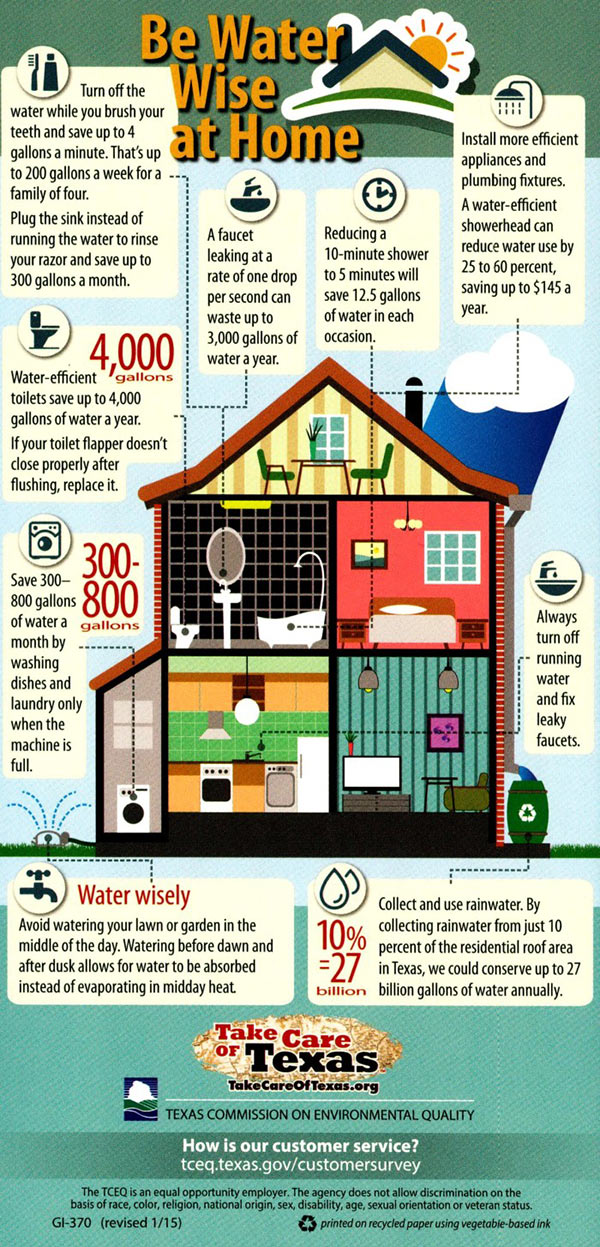
As individuals or families, we can reduce the amount of water we use in our homes with just a few simple steps that don’t cause undue hardship in our way of life.
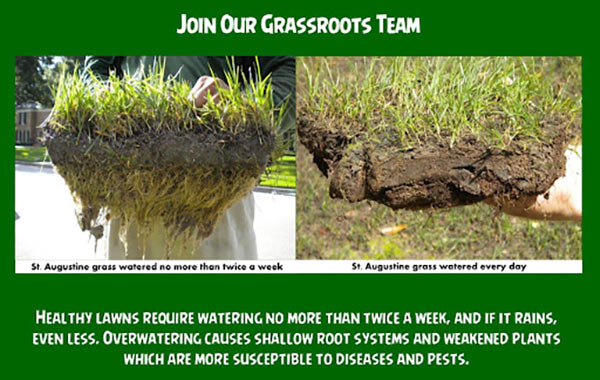
We are all affected by the actions of our community and neighbors. Local HOAs have irrigation systems that water areas they maintain such as tennis courts, swimming pools, and landscaped areas. Individuals can help oversee these areas and report leaks to the appropriate HOA. If you notice a problem, report it!
The FBMUD47 Board strives to stress the importance of water conservation by educating the community on our water sources and infrastructure and ways to reduce water consumption and loss. The District maintains a limited irrigation system for landscaping and some trees along the District’s trails. The Board regularly evaluates and repairs issues in the irrigation system to limit water waste. The Board is also exploring additional ways to reduce or modify the irrigation system as landscaping and trees are more established and require less water.
In rural Kenya, 10,000 gallons can provide sufficient drinking water for a family of five for 10 years. Now consider how much water is unintentionally wasted in our own households—and the combined impact across the 990 homes in FBMUD47. Whether we calculate the water wasted or the water that could be conserved, the total is staggering. Our daily choices affect our families, our community, and our world. WATER CONSERVATION BEGINS WITH US.
Article & Photos by Lauren Svatek
Author’s Note:
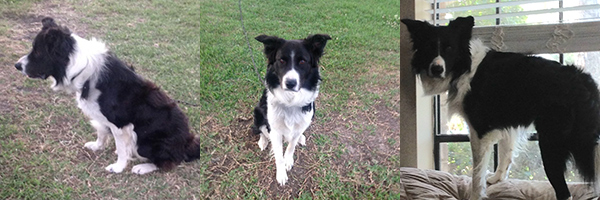
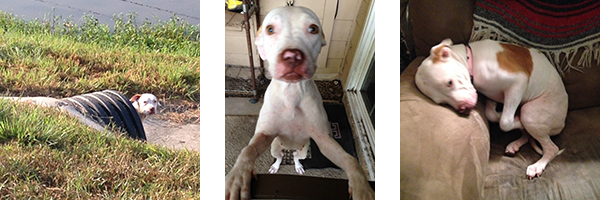
I love all dogs! I am blessed with two wonderful, intelligent, loving and loyal rescue dogs. Reo, a Border Collie, is the dog who taught me about dogs. As a herding dog, he needed to be challenged, exercised and worked. They are the smartest of all dog breeds. He and I together were attacked in a dog park and bitten by two German Shepherds. Rather than walking in fear with him, I received training with him and he learned the basic commands which he follows 95% of the time! Pippa, a Pit Bull mix, who followed me to my car from the drainage channel, is my second dog. She had been dumped on the trail, weighed less than 30 pounds, and was starving. I trained Pippa myself. While Reo has a calm demeanor, Pippa is anxious and protective. We were attacked on one of our walks along our community trails by a large and small dog who escaped a fence. I protected them from the attack and I managed to only get grazed by the teeth of the larger dog. I asked the owner to repair her fence. I KNOW what to expect from my dogs, but I also know that ANYTHING can be a catalyst to set the dog off into protective mode. I try to always expect the unexpected.
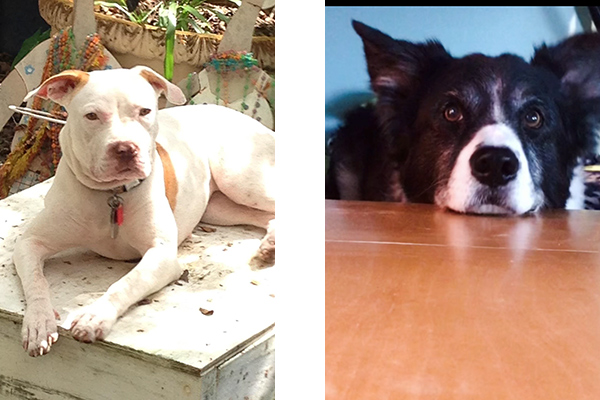
These precious dogs were an unexpected joy to my life and give unconditional love despite dubious beginnings.
REO, the wild and scruffy
PIPPA, the abandoned and starved
Our trails are an extraordinary place to walk, run, jog, bike, walk our dogs, and enjoy nature and the outdoors. It is an opportunity to breathe in and relax in a beautiful setting. These trails also require all of us to be responsible for ourselves and others to keep them safe and secure for all to enjoy. Have you ever seen a dog walker being pulled by its dog down the trail and see them break leash and dash away? Have you ever been approached by a dog on the trail with no owner in sight? Have you ever seen dogs nudge their heads through fences along the trail? Have you while walking your dog ever passed another dog being walked and both of you had to control and calm your dogs to get by? Have you ever seen a dog being walked that suddenly went wild because they saw a squirrel? These are events that happen all the time and where we all have the opportunity to make a difference.
All of us have our own personal ways of caring for our dogs. In our homes and in our yards, the dogs are in their own personal territory that they share with you. It is their safe place. In a home environment, they may bark when someone knocks at the door or rings the doorbell or even when they hear a car or a sound from outside. They may chase animals in their yard (and sometimes catch them). There is a freedom there that they cannot have anywhere else.
There are ways you can walk the trail with your dog that is safe for you and your pet as well as others who share the trail with you. Dog Park rules provide a basic outline of proper dog behavior inside the park with other dogs. However, some of these rules can translate to the trail and help make your walk more enjoyable and safe for both of you. The dog rules of Kitty Hollow Bark Park and Sugar Land Memorial Park Pawm Springs Dog Park are pictured below.
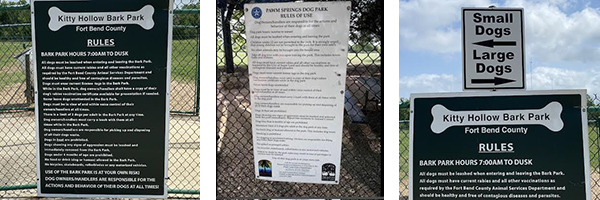
Pawm Springs Dog Park lists a few more rules than Kitty Hollow Bark Park, but they are almost identical. If you have never used a dog park, you might like to review all the rules and perhaps incorporating them into your walk routine.
Here is an adaptation of the rules to use as a guideline for walking the trails with your dog(s). The trail head signs for Vicksburg Walking Trails have included two of these as trail rules which are pets are always on leash and pick up and disposal of dog waste is the owner’s responsibility.
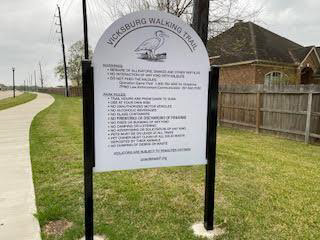
PETS MUST BE ON LEASH AT ALL TIMES.
The number one rule on the trail when walking your dog is that it MUST be on a leash. No exceptions. No matter how well behaved your dog is, there are things that will excite it, scare it, or make it want to protect you. This is the major difference between trail walking and dog parks.
PET OWNER MUST CLEAN UP ALL SOLID WASTER DEPOSITED BY THEIR ANIMALS.
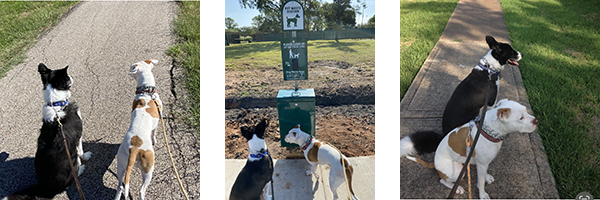
Picking up your dog’s waste is the responsibility of the pet owner. Numerous pet stations with bags provided and waste disposal container are available along the entire trail route for your convenience. Trash cans are also located along the trail with benches to stop and rest along the way.
Here are a few suggested guidelines from the dog park rules that dog walkers might incorporate to make their walks safer for themselves and others.
Dogs should have current rabies and all other vaccinations as required by the city of Missouri City as well as be healthy and free of contagious diseases and parasites.
Dogs should never be left unattended.
Dog owners are responsible for the actions and behavior of their dogs at all times.
Good fences are good for you, your dog and the dogs outside your fence.
Our trails are lined by the back fences of houses in our neighborhood. There are a lot of dogs on the other side of those fences—big and small. When passing houses along the trail they are often barking, jumping at the fence, or scratching along the fence. Consider that within that yard is territory that belongs to that dog.
The hazard here is loose fence boards allowing dogs to escape. You should just take it as a fact that if a dog can get his head through one board of the fence, he can get out no matter how large he is. Some dogs can jump a 6 foot fence if it is motivated to do so.
A digging dog can dig a hole or tunnel to escape under the fence also.
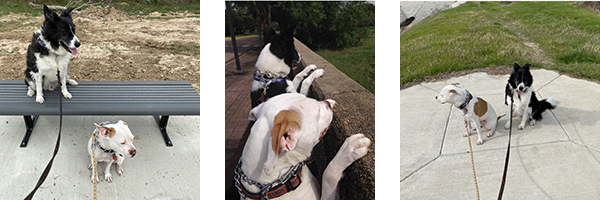
Let us dedicate ourselves to creating a safe trail in our little part of the world in which all wildlife thrives, people can safely connect with nature, and dogs and people are thriving.
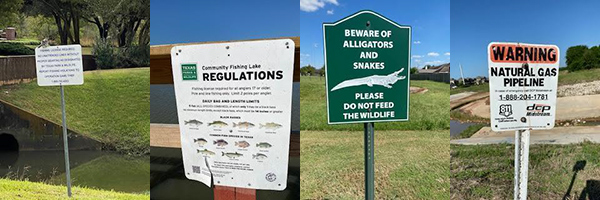
We have signs all around our community. The signs placed along the trails are there for a reason. Whether it is Beware of Alligators and Snakes, Fishing License Required, or Warning Pipeline, they are there to remind all of us to be aware of the warnings and act accordingly. See the few that are around our trails and in Kitty Hollow. We just ask that all residents be mindful of the signs for their protection and for the protection of the environment.