The Wild Alligators Among Us
Article & Photos by Lauren Svatek
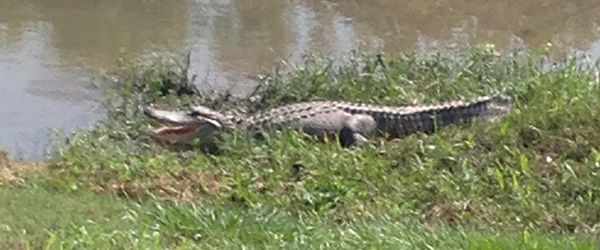
Wild alligators are an awesome part of the nature existing in and around our neighborhoods. Our drainage channels are a natural habitat for these beautiful unique creatures. Runners, walkers and dog-walkers (dogs on leash, of course) using our trails are often treated to a glimpse of these reptiles.
Alligators have occupied Southeast Texas for an estimated 65 million years despite climate and environmental changes. While the dinosaurs went extinct, the alligators survived and lived on in our wetland habitats including marshes, bayous, and lakes. Alligators were once an endangered species, but through successful management and protection of their habitat the species has been able to recover. Alligators are protected by state and federal law.
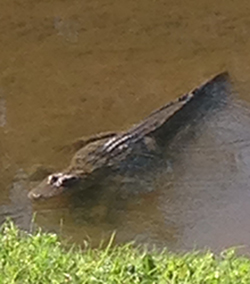 Since humans and alligators share a common space, it is critical for us to be educated about them so that we are able to co-exist with them safely.
Alligators are relatively inactive during winter months (approximately November to March), but due to this area’s warm humid climate, this may vary. They do not hibernate, but go underground or underwater during really cold temperatures. During this time they do not hunt and can go for long periods of time without eating.
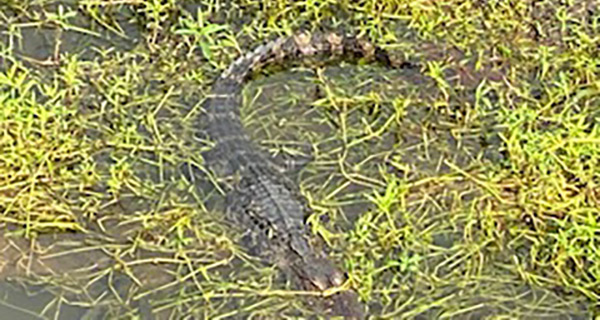
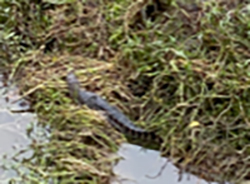 Alligators mate during late spring and early summer. During this time you will generally see more movement from the alligators along drainage channels within and near the District. Female alligators will lay from 15-60 eggs in a mound composed of grass, cattails and mud. Decomposing mounds of vegetation should always be avoided as this could be a nest and the female will be highly protective of the area. Eggs usually hatch around late August or early September. Babies measure approximately 8-9 inches and will be protected by their mother for up to 2 years. Although they may appear “cute” and harmless, it is wise not to approach them as the mother is usually very close and very protective.
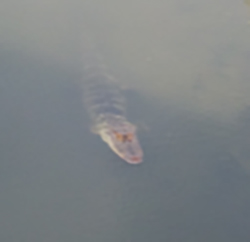 You cannot determine the sex of an alligator by simply looking at them. Males at age 10 average about 8 feet and females of the same age average a little over 6 feet. You can almost be sure that an alligator over 10 feet is a male. Alligators about the size of 4-5 feet are usually travelers as they are expanding their territories away from larger alligators. You can estimate the size of an alligator by judging how many inches there are between the nose and eyes; i.e. 4 inches is about a 4 foot alligator.
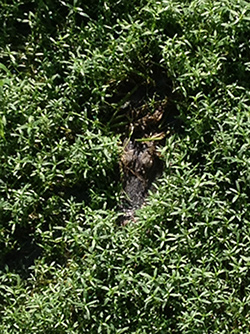 Alligators do blend in with their surroundings and wait for food. Small alligators eat spiders, insects, minnows, shrimp, and crabs. As they grow, their diet may include small fish, turtles, snakes and small birds. The larger they get, the variety and size extends to large turtles, wading birds, ducks, nutria, otters, raccoons, wild boar, and occasionally deer. Carrion is also a favorite, easy accessible food.
Alligators do not NATURALLY eat humans. Very specific circumstances have to occur for alligators to come close to any people such as when a human comes too close and it feels threatened, when a human threatens a mother’s babies, or when humans have fed an alligator and cause it to feel comfortable approaching them.
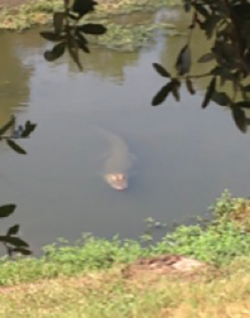 Notably, alligators may lie on the bank of a lake, bayou or channel to bask in the sun. This is a natural behavior and does not indicate aggression. An alligator will hiss as a warning that you are too close. Beware that they can move at bursts of speed of 35 mph on land. They are capable of staying underwater for almost 30 minutes at a time so if you see bubbles moving in the water, it is possible that is an alligator.
The opportunity to observe alligators along our drainage channels is a great bonus, but these alligators are protected by law. An alligator is NOT a nuisance or a threat by simply existing in our neighborhood; only a Texas Game Warden can make that determination. DO NOT attempt to move or kill an alligator. This increases the chance of an alligator biting or injuring a person and is prohibited by law. Feeding, injuring or harassing alligators is a punishable offense and can result in a fine. Respect the wildlife so all can enjoy the wild alligators among us!
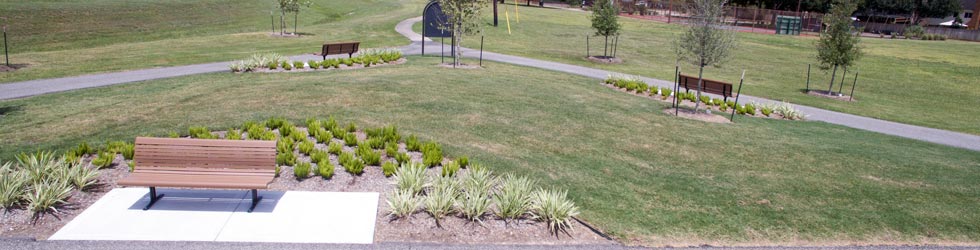
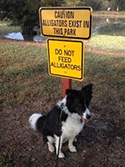
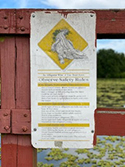 Following these simple rules, understanding their behavior, and having respect for the wild alligators are the best way to protect ourselves and our wildlife. There are several signs in Kitty Hollow Park, which is a great place to observe alligators, with safety rules regarding alligators. The signs remind us that alligators are smart, that we should be smarter than alligators and to always be careful and safe!
 Texas Parks and Wildlife Department has suggested rules when encountering and observing alligators that we have posted along with this article.
There are great sources of information on alligators and other wildlife at the following links (and many others):
www.tpwd.texas.gov
https://tpwd.texas.gov/huntwild/wild/species/americanalligator
https://dfwwildlife.org/wp-content/uploads/2018/09/Alligator-Distribution-in-Texas.pdf
https://www.galvestontx.gov/1163/Alligator